Episode 1
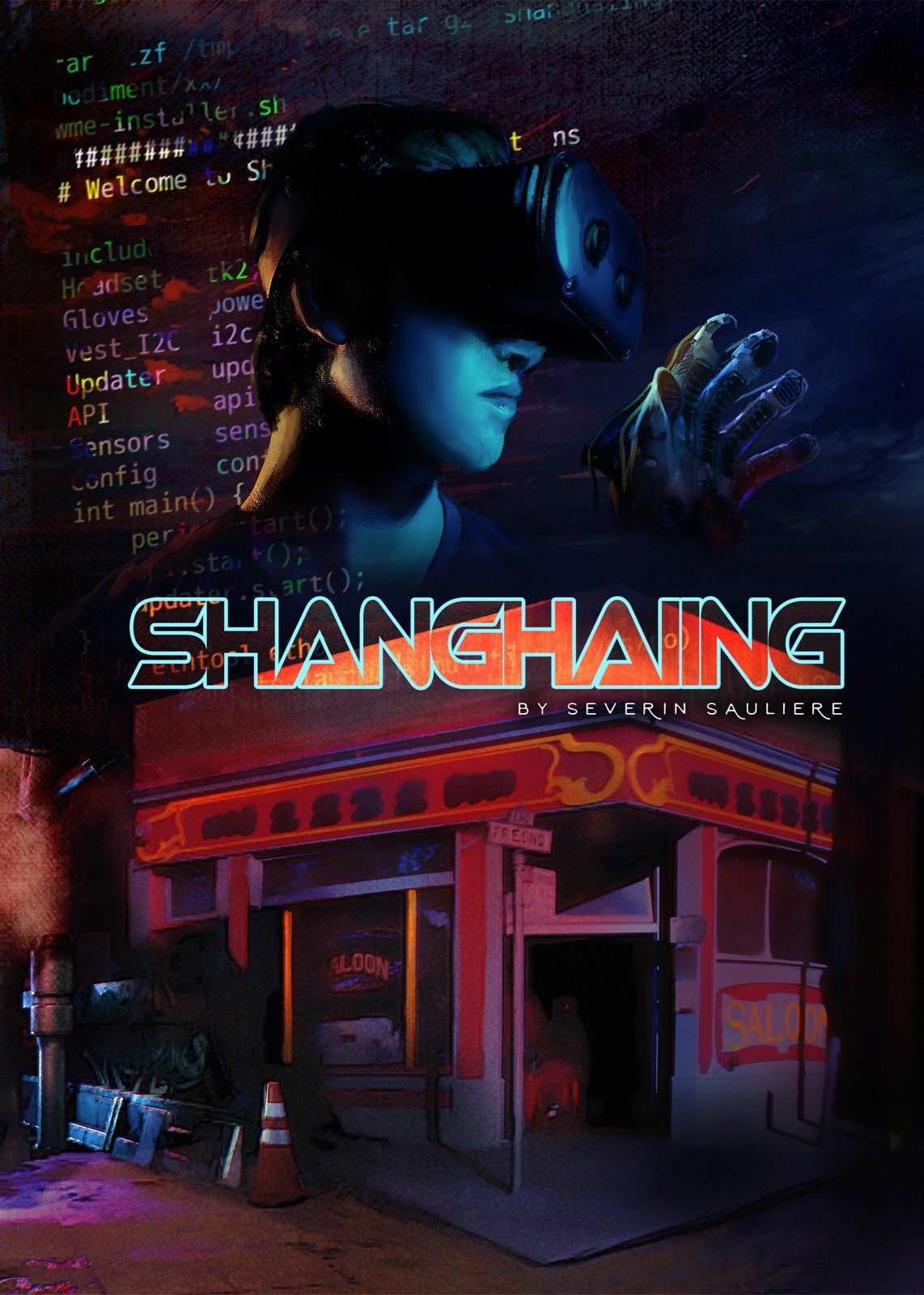
Henry walks into the wrong bar. Five simulations later, he's back on Market Street holding a cardboard sign.
- Published
- June 2022
- ISBN
- 979-8-9860917-0-9
Reshape unwanted biases through empathy-generating simulations. Improve yourself, or someone you love, and become a positive force in the complex world we live in.
Now accepting new patients in San Francisco
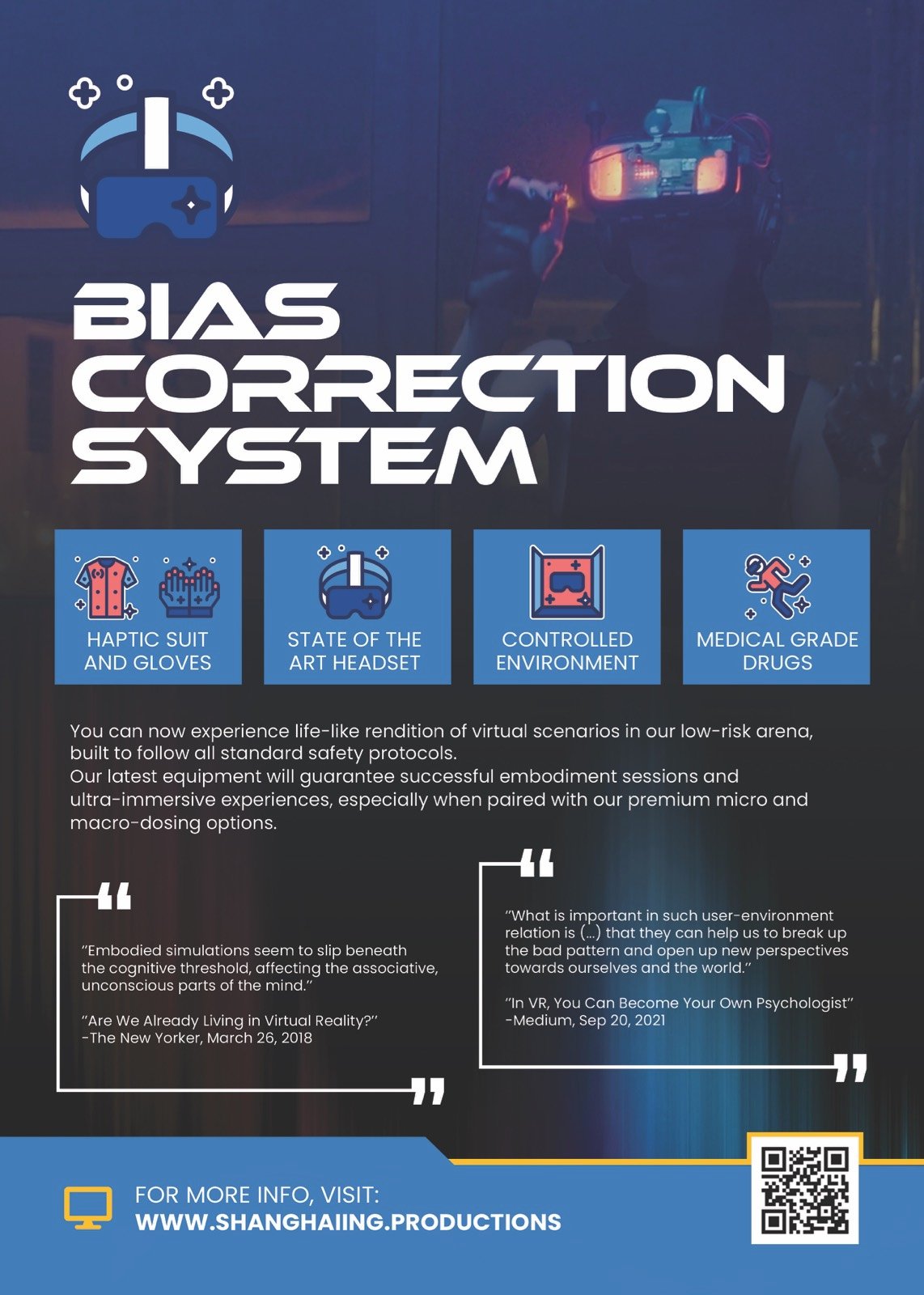
Every session runs on the same equipment, in the same supervised space.

Life-like rendition of virtual scenarios.

Full-body feedback, essential for successful embodiment sessions.

A low-risk arena that follows standard safety protocols.

Micro and macro-dosing for ultra-immersive experiences.
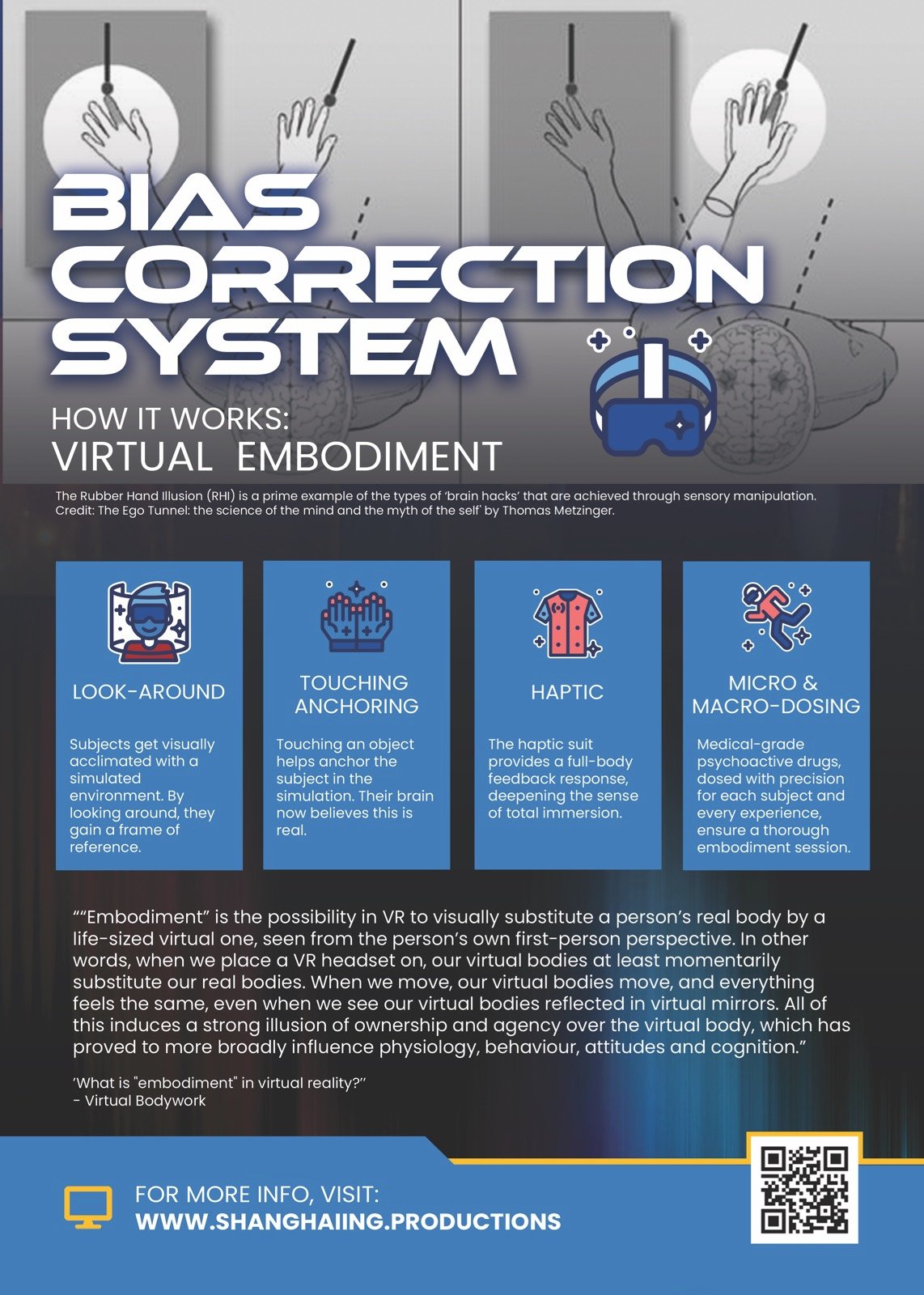
Your brain decides which body is yours. Our sessions give it a new one, and let it live someone else's day.
Subjects get visually acclimated to a simulated environment. Looking around gives them a frame of reference.
Touching an object anchors the subject in the simulation. Their brain now believes this is real.
The haptic suit provides full-body feedback, deepening the sense of total immersion.
Medical-grade psychoactive drugs, dosed precisely for each subject and experience, ensure a thorough embodiment session.
Each program is a scenario built to correct a specific bias. Most patients complete all five in a single visit.
/bcs/embodiment/1/Ball.exeChildhoodReturn to a childhood bedroom and listen to what happens behind the door.
/bcs/embodiment/2/Smoke.exeDependencyFeel how quickly one small offer leads to the next.
/bcs/embodiment/3/Train.exeAuthorityLook for help in a dark tunnel and find out who answers.
/bcs/embodiment/4/Jail.exeConfinementSpend a night on the wrong side of the bars.
/bcs/embodiment/5/FullCircle.exeHomecomingWake up on a familiar street, holding a sign that says “Change please.”
Our introduction program, completed in a single afternoon.
Spend a few days with us for maximum efficiency.
We know how difficult teenagers can be. We are here to help.
Also called shock therapy, and quickly becoming everyone's favorite.
Every family has one. The uncle who ruins Thanksgiving. The teenager who stopped listening. Intervention therapy works even when they don't want help. Especially then.
Enlist a loved one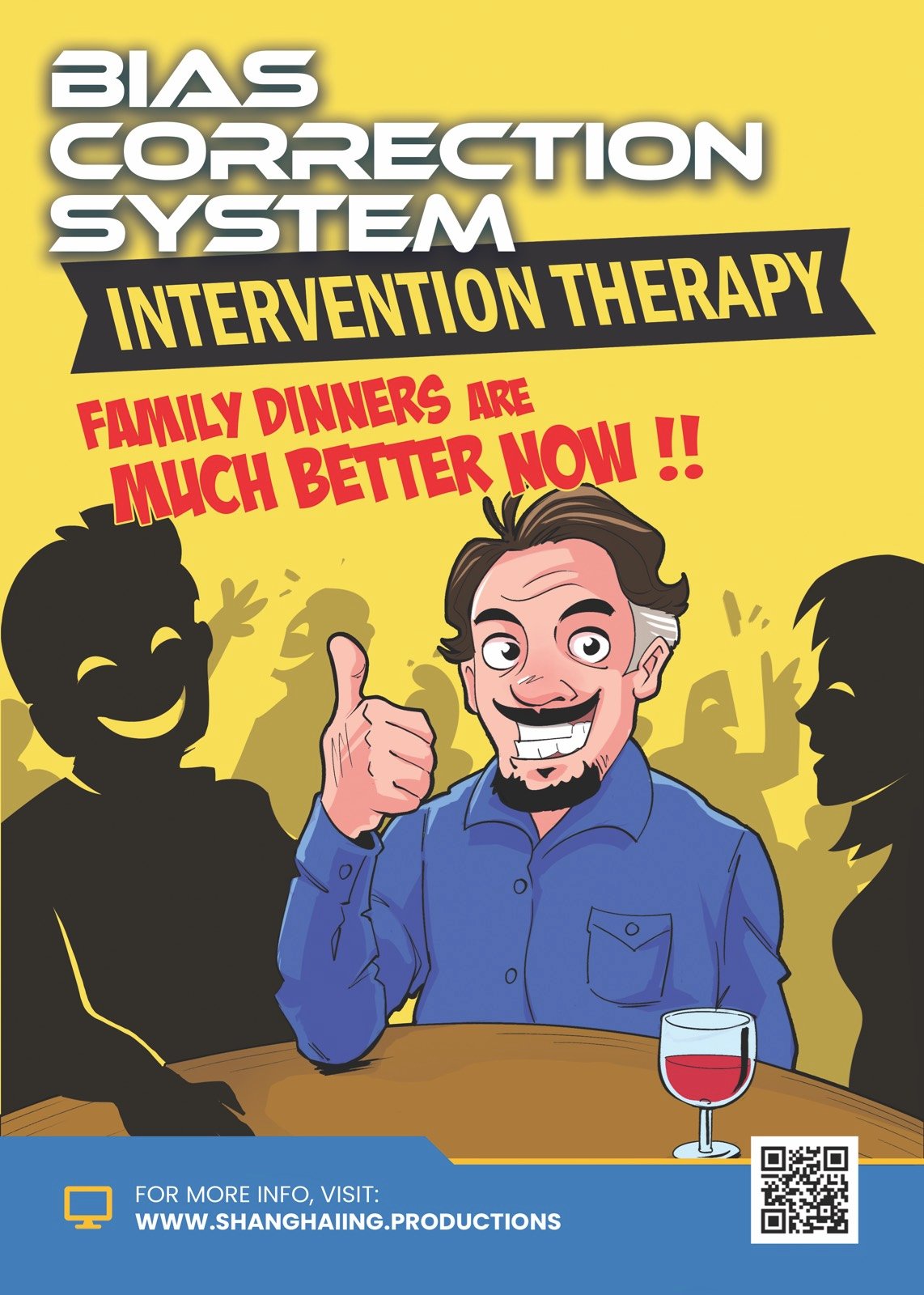
Patients leave kinder, calmer and more generous. Most of them don't remember why.
“I'm glad I helped that guy. I just wish I could do more to make a difference.”
Virtual embodiment is not science fiction. Our methods build on published work.
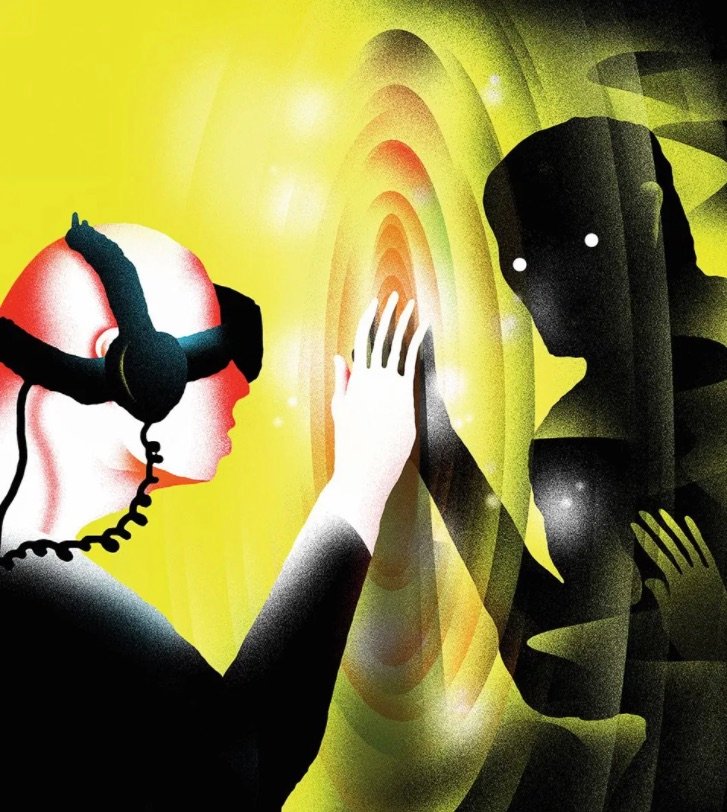
“Embodied simulations seem to slip beneath the cognitive threshold, affecting the associative, unconscious parts of the mind.”The New Yorker, March 26, 2018
“What is important in such user-environment relation is (…) that they can help us to break up the bad pattern and open up new perspectives towards ourselves and the world.”Medium, September 20, 2021
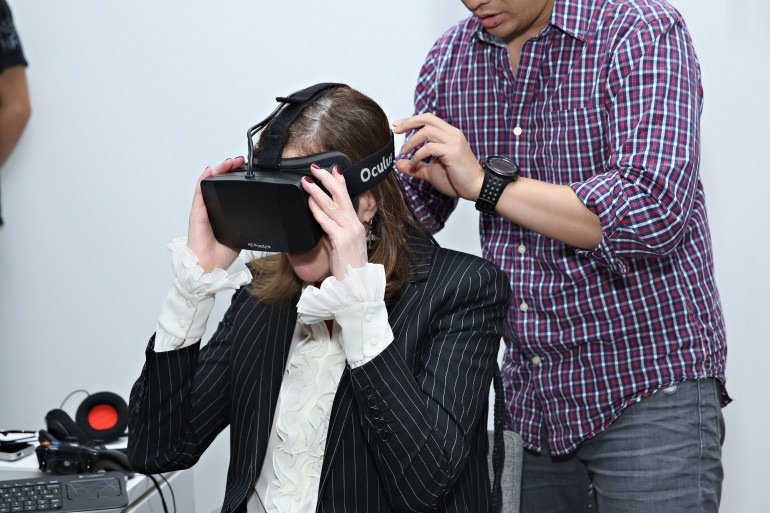
France's Ministry of Justice is testing a virtual reality headset to prevent repeat domestic violence offenses.RTL, 24 septembre 2021
From a small research lab to a national leader in behavioral correction.
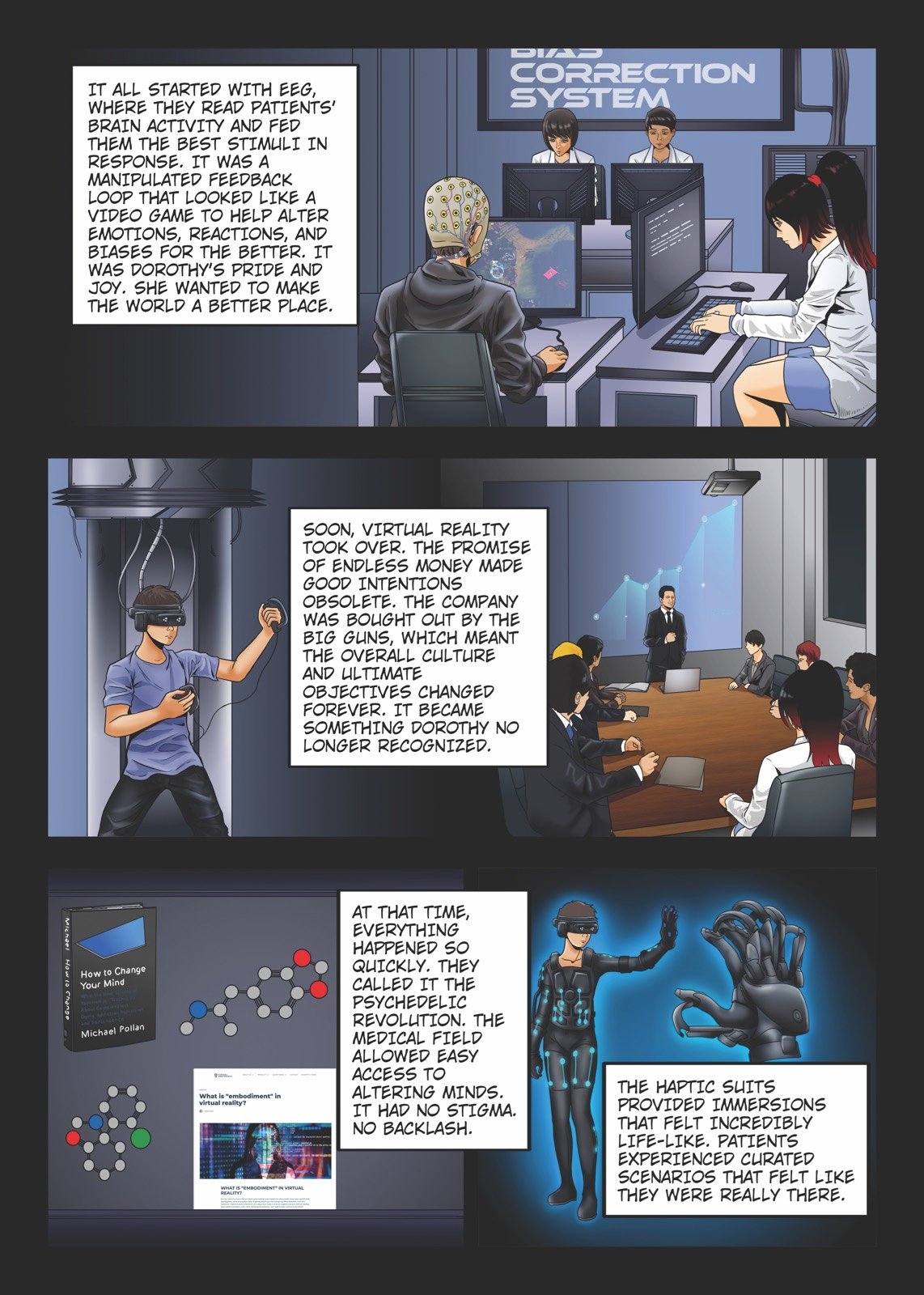
Patients wore EEG helmets and played what looked like a video game, while we read their brain activity and fed them the right stimuli in response.
Headsets and haptic suits made curated scenarios feel like the patient was really there.
New investors helped our labs grow faster than we ever imagined.
We learned to target precise behaviors and biases, and to correct them as we went.
Our programs now serve non-violent offenders in partner facilities.
Two facilities in San Francisco, and counting.
Founded in San Francisco by BCS.
Tell us who the program is for. A facilitator will contact you to schedule a demo.
For when you feel out of the loop, constantly behind, and missing some of the most essential milestones of our times.
Apply nowWe all have a problematic uncle or a difficult teenager in our lives. It's not too late to give them the gift of empathy and openness.
Enlist themLatest intake: M., Market Street. Status: pending.
Shanghaiing: to trick, mislead or confuse someone into something that they normally wouldn't do willingly.
Read about the episodes
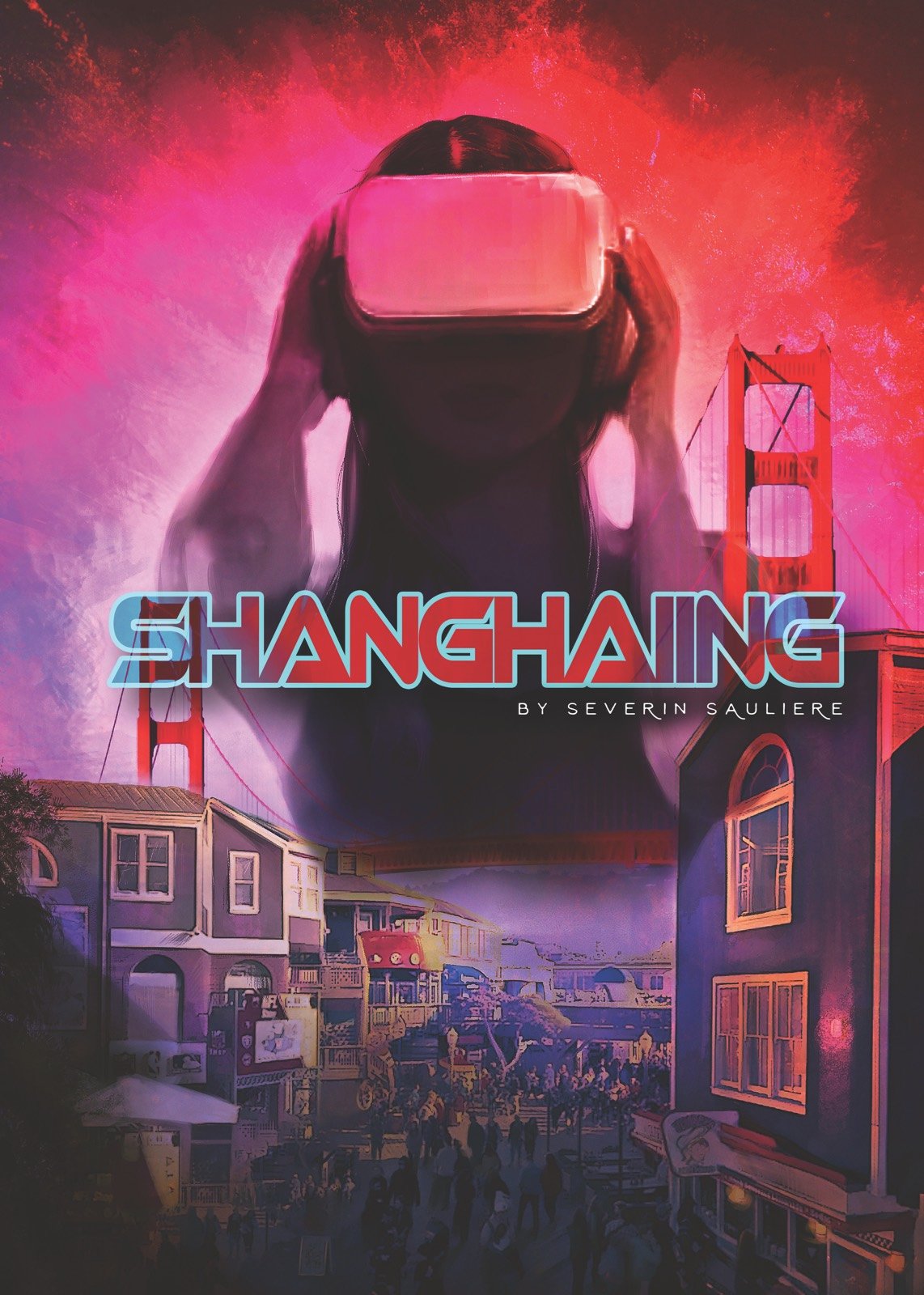
In the 1800s, men in San Francisco were drugged in waterfront bars, carried through tunnels and sold to ship captains. They called it shanghaiing.
Today, Dorothy and James run a saloon near Market Street. When a customer says the wrong thing, his drink hits different. He wakes up in their basement, wearing a headset, living someone else's worst day.
Is changing someone against their will ever okay, if it works?
Henry walks into the wrong bar. Five simulations later, he's back on Market Street holding a cardboard sign.
Dorothy's story: how her neuroscience lab became a company she no longer recognized, and how she built her own in a basement.
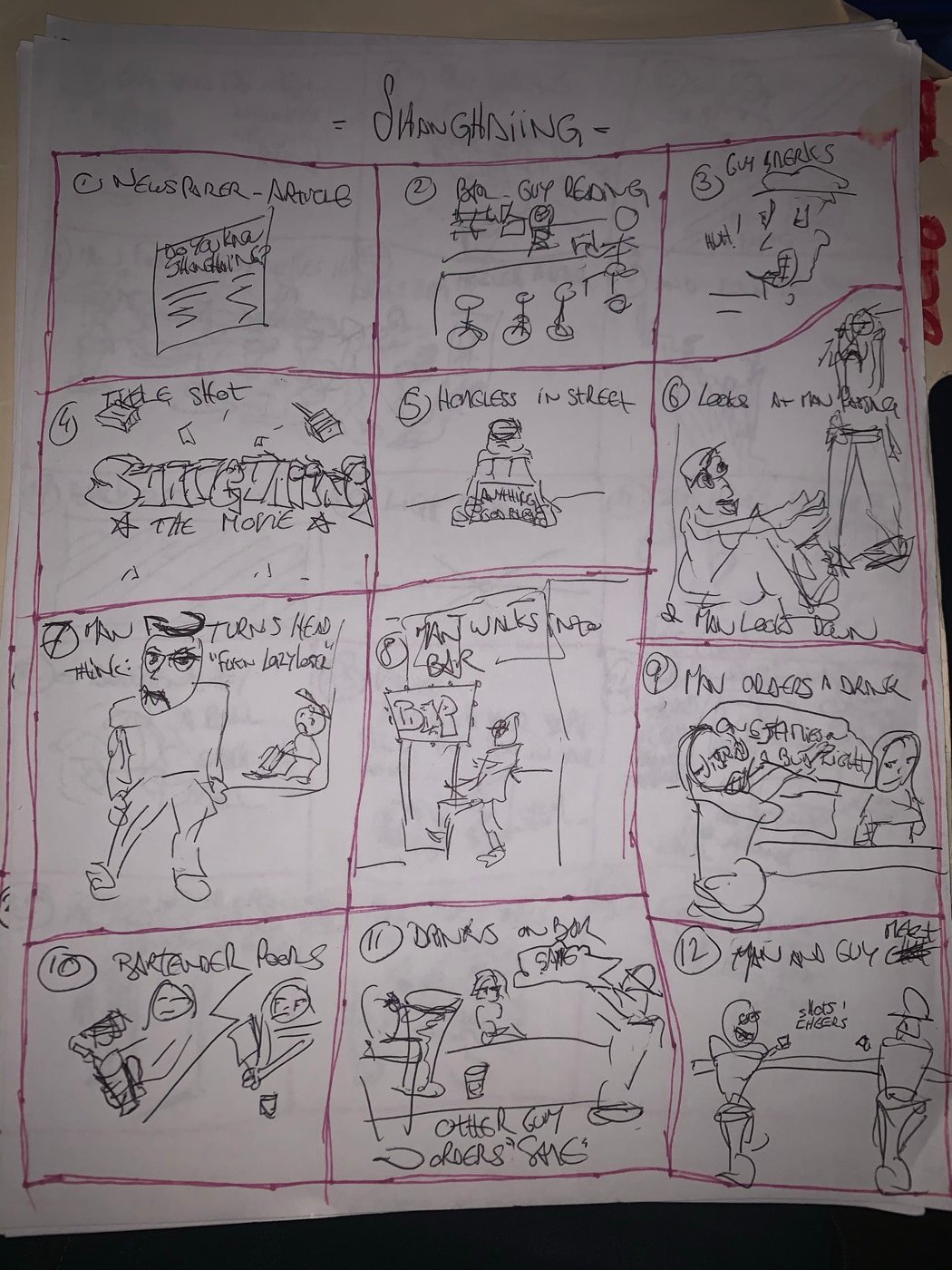
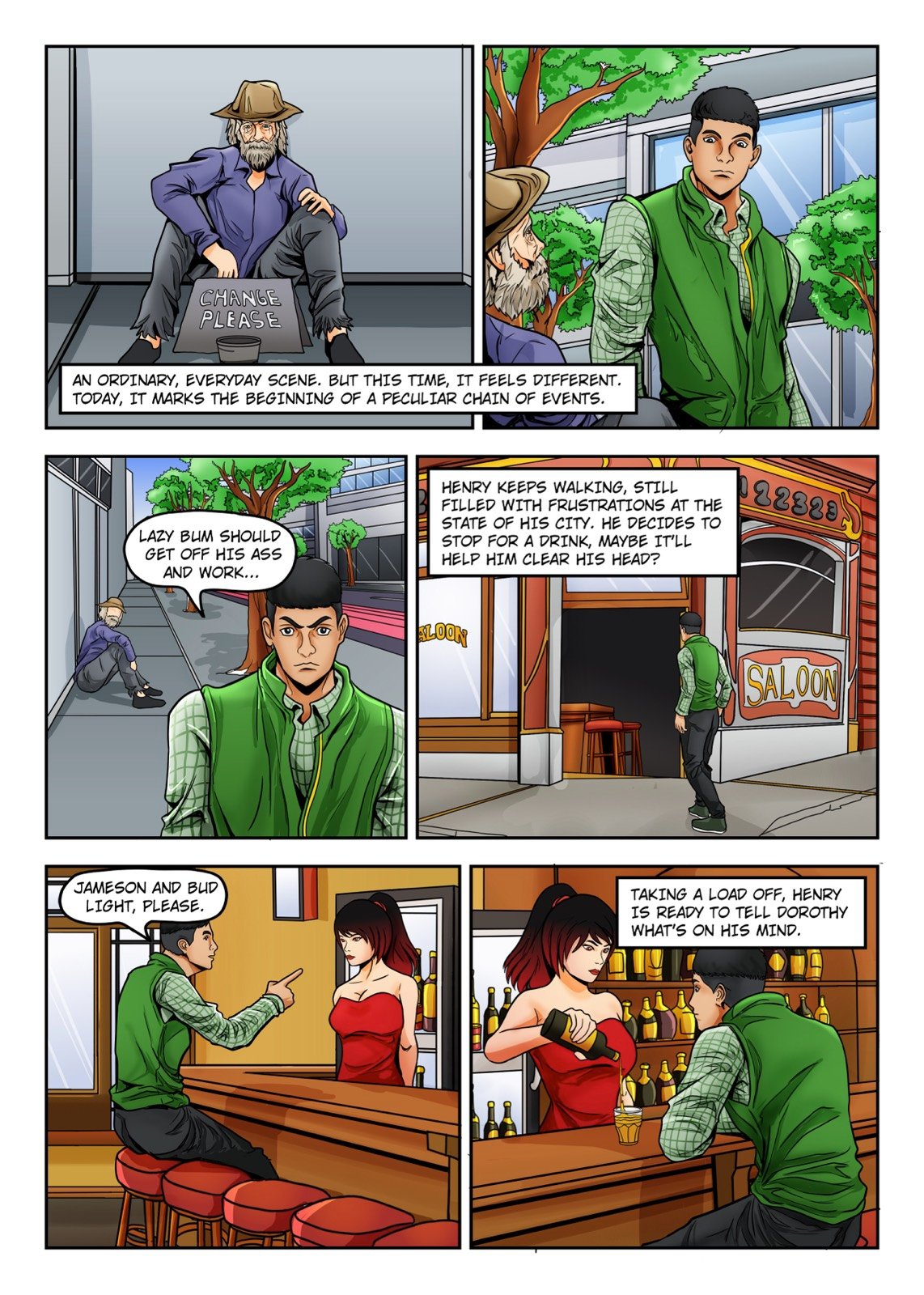
I wrote Shanghaiing: the story, the script and every line of copy. Before an illustrator drew a single panel, I thumbnailed each page, blocked out the layouts, scouted locations and gathered references, so the art team knew exactly what I wanted.
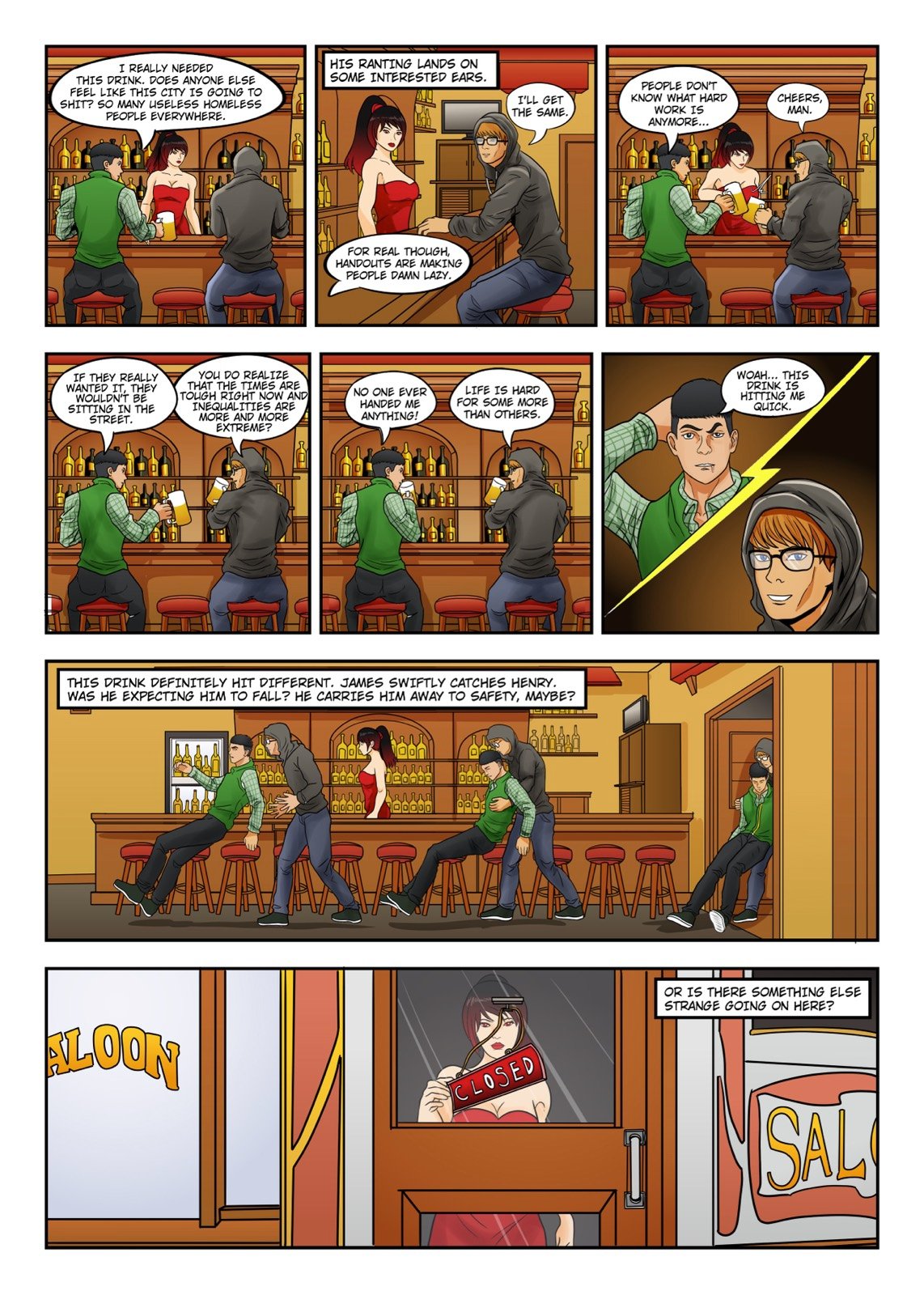
Thumbnails first. Henry passes the man on the sidewalk, walks into the bar and orders. The finished page keeps every beat.
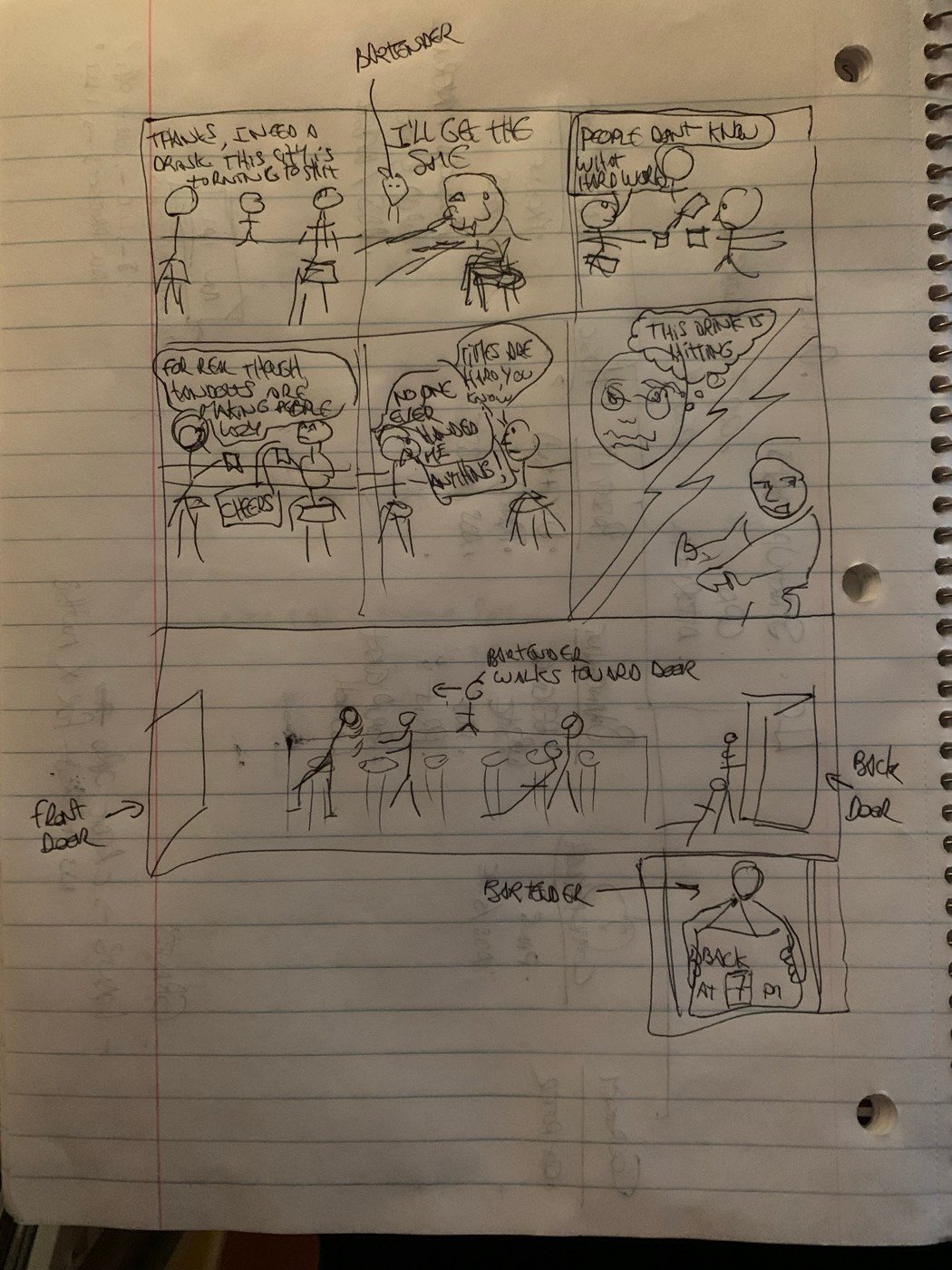
The drink scene, blocked out in a notebook. The bartender's “Back at 7” sign became Dorothy flipping the sign to Closed.
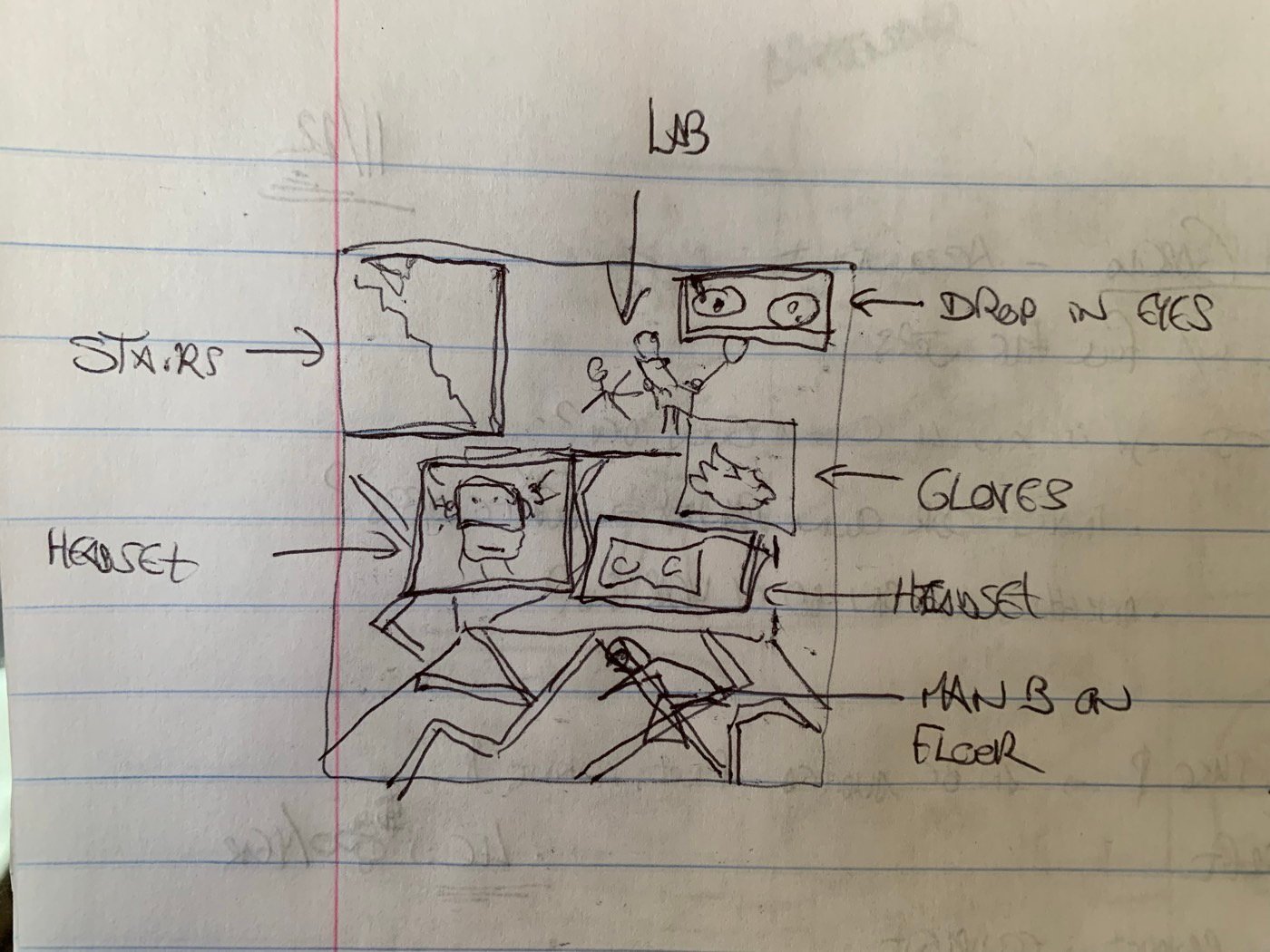
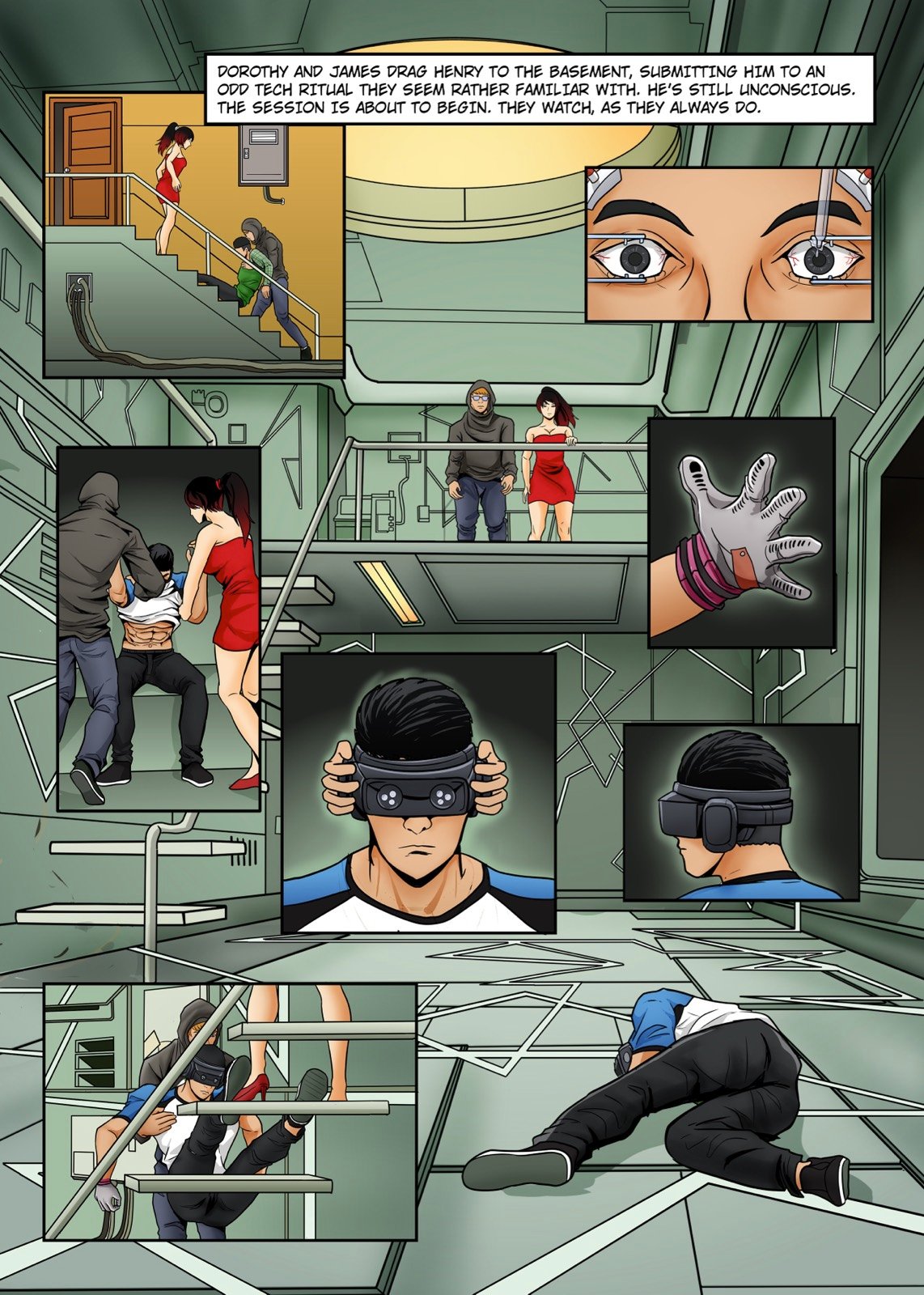
A floor plan of the lab: stairs, headset, gloves, eye drops, the man on the floor. The basement was built from this drawing.
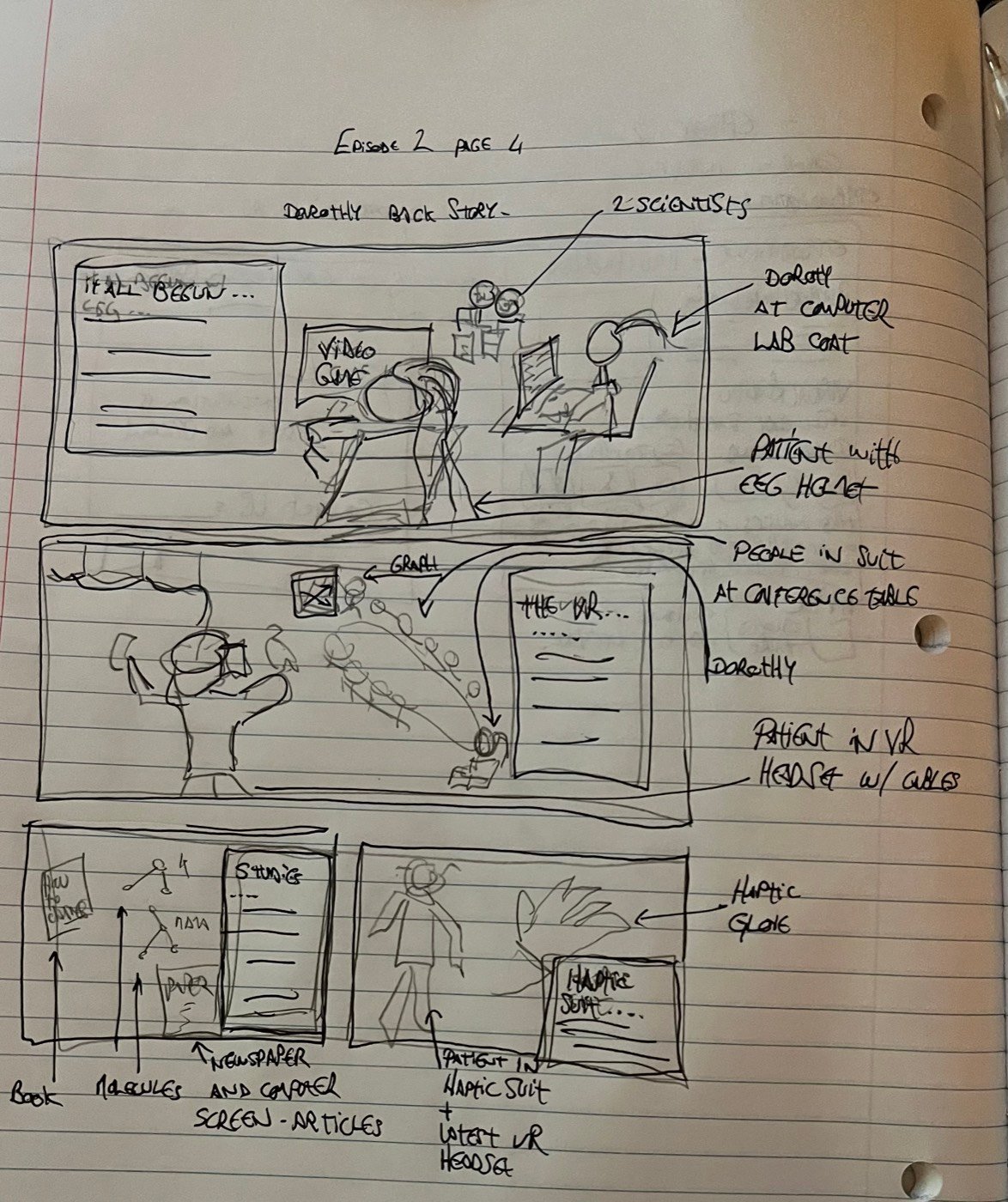
Dorothy's backstory, with every element labeled for the illustrators: the EEG helmet, the conference table, the book, the molecules, the haptic suit.
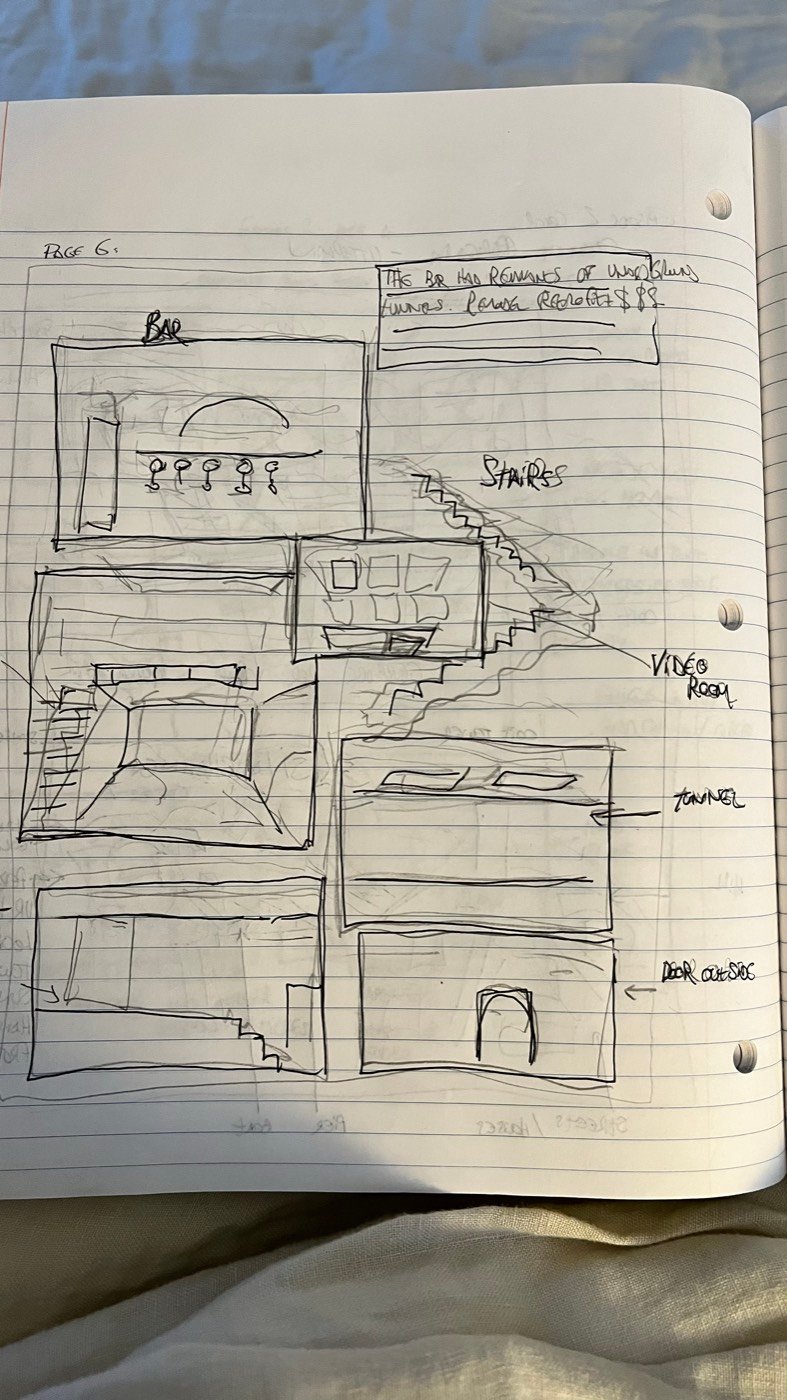
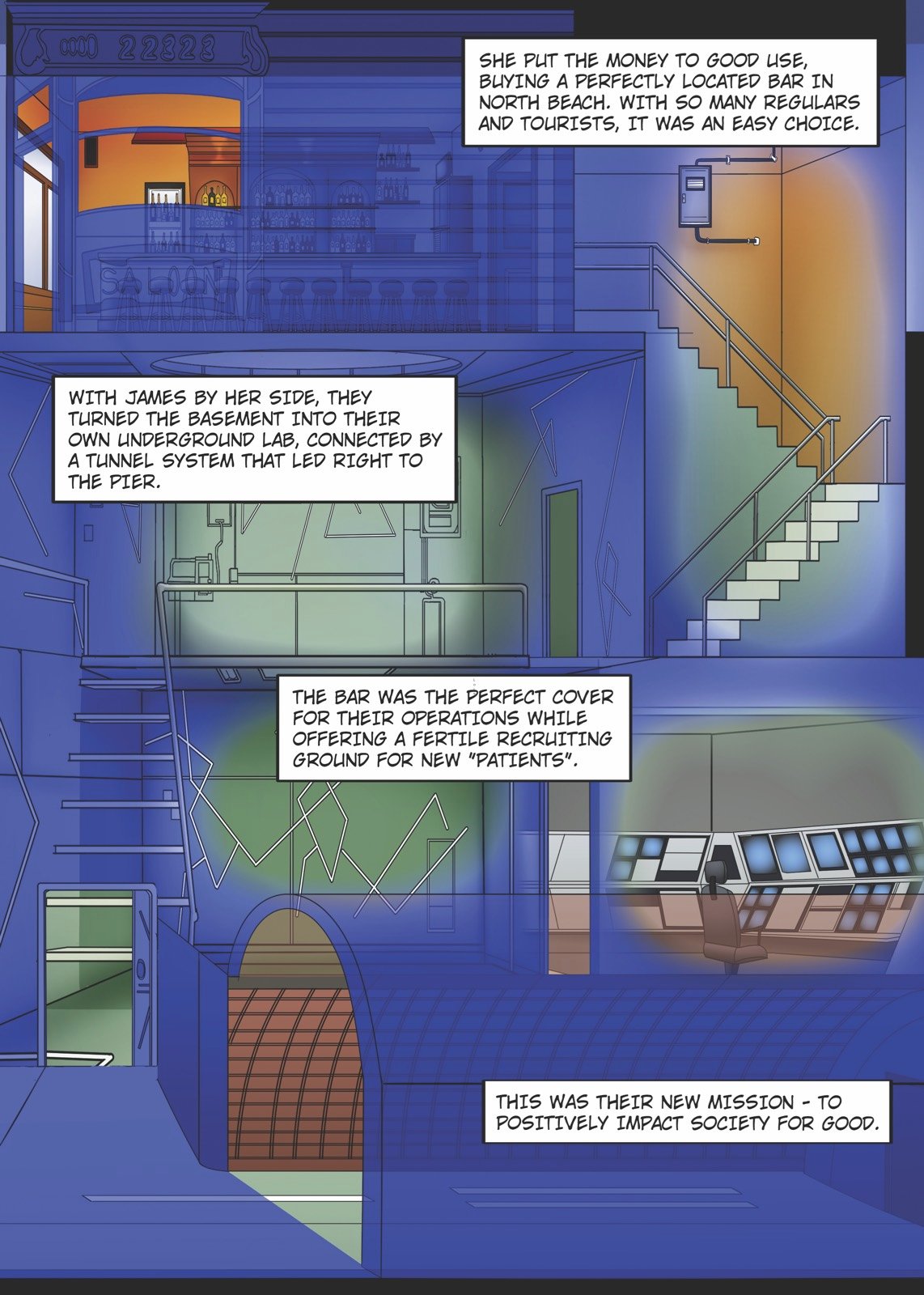
The cutaway: bar, stairs, video room, tunnel, exit to the street. One drawing that explains the whole operation.
Creator, writer and art director. Severin built Shanghaiing from the first thumbnail to the printed book, and published it through Better Call Sauliere in Los Angeles.
“Created by Severin Sauliere, Shanghaiing is a Black Mirror-esque look at correcting social bias in today's world.”CBR, 10 Best Indie Titles at LA Comic Con 2022